
Welcome
Hello, and welcome!
We’ve put together everything you’ll need for a comfortable stay at Harappa Cafe. On the day you arrive, we may not have the people to walk you through it all, so please be sure to read this before you get here.
This handbook is for volunteers who already have a stay confirmed with us. If you’re still thinking about applying, start with the information page.

About Harappa Cafe
Harappa Cafe is a community diner open to everyone, children and adults alike. We want it to be a place where people connect, and a space where anyone can feel at ease. The food is a buffet, and the price is up to you.
Everyone here is a volunteer, the owner included. We come from Japan and abroad.
Not all the vegetables we use are organic, but we regularly receive organic and low-pesticide produce from nearby farms we help out.

0. Getting here
The nearest station is JR Yufuin Station Just outside it is the Yufuin Station Bus Center, where every express and local bus arrives and departs.
Getting to Yufuin
Here’s a rundown by where you’re travelling from. Except for the ferry, the links below are Japanese-only pages, so use your browser’s translate feature on them.
The information here is current as of 9 September 2026 and can change. Check the linked pages for the latest.
From Fukuoka (Fukuoka Airport / Hakata)
The “Yufuin-go” express bus (ゆふいん号): about two and a half hours, ¥3,250 one way.
- Seats are reserved, so book ahead. Book and pay online at least 7 days in advance and the fare drops to ¥2,880. Book here / route info (Nishitetsu Bus)
- Get off at the Yufuin Station Bus Center (the last stop).
- At Fukuoka Airport the stop is at the international terminal. If you land at the domestic terminal, take the free shuttle between terminals.
- You can also board at Hakata Bus Terminal or Nishitetsu Tenjin Highway Bus Terminal.
You can come by train, but the bus is usually cheaper and takes about the same time. Unless you’re travelling on a Japan Rail Pass (an unlimited-travel pass some overseas visitors buy), we’d take the bus.
From Oita Airport
The “Yufuin Liner” airport bus (湯布院ライナー): about an hour, ¥2,000 one way.
- No reservation needed. Airport buses (Oita Kotsu, the operator)
- Get off at the Yufuin Station Bus Center.
- There are only a few departures a day, and none to Yufuin after early evening. Please plan your arrival around this.
From Beppu / Oita
From Beppu.
- Kamenoi Bus route 36, the Yufuin line (亀の井バス 由布院線): about an hour, ¥1,100 one way. No transfers, no reservation. Kamenoi Bus
- Buses to Yufuin leave from the west exit of Beppu Station, not the east.
- Get off at the Yunotsubo (湯の坪) bus stop. The cafe is a 1-minute walk from there.
There’s also a train from Beppu, but no direct service: you change at Oita. It’s a detour and costs more, so unless you’re travelling on a Japan Rail Pass, take the bus.
From Oita.
- The JR Kyudai Main Line runs direct to Yufuin: about an hour, ¥1,090 one way, no reservation.
For live bus times, use Google Maps. For trains, JR Kyushu.
From Kumamoto / Aso
Take the Kyushu Odan (“Trans-Kyushu”) Bus (九州横断バス), run by Kyushu Sanko. The fare depends on where you board, so check the fare table on the official site. Kyushu Odan Bus
- Reservation required.
- Get off at the Yufuin Station Bus Center.
From Kansai
Take the Sunflower ferry (さんふらわあ) from Osaka Nanko to Beppu International Tourist Port (別府国際観光港), an overnight sailing that gets in early the next morning. You can book in English. Fares vary a lot by season and cabin type.
From the port, catch a bus to Beppu Station from the stop in front of the terminal (about 15 minutes, ¥210). From there, follow the From Beppu steps in the From Beppu / Oita section above.
Buses to Yufuin leave from the west exit of Beppu Station. The bus from the port drops you on the east side, so walk through the station to the west exit.
If you’re coming by train
You can’t use IC cards at Yufuin Station. It’s outside the service area for Suica, ICOCA, SUGOCA, and so on, so buy a paper ticket.
From Yufuin Station to Harappa Cafe
Address: 1525-12 Kawakami, Yufuin-cho, Yufu-shi, Oita 879-5102
In Japanese: 〒879-5102 大分県由布市湯布院町川上 1525-12
About a 20-minute walk (1.1 km).
- The way is gently uphill in places.
- This walking route on Google Maps keeps you on roads with a footpath.
Arriving after dark. There are streetlights and it isn’t pitch black, but some stretches are dim. If you expect to arrive late, let us know in advance.
Taxis. There’s a taxi stand in front of Yufuin Station, but there aren’t many taxis in Yufuin, and sometimes none come even if you wait.
1. When you arrive
When you reach Harappa Cafe, wait inside and someone will take you to where you’ll be staying. It’s right next to the cafe: a retro, hideaway-like building we call the WWOOFer House, or just “the House.”
Rooms in the WWOOFer House
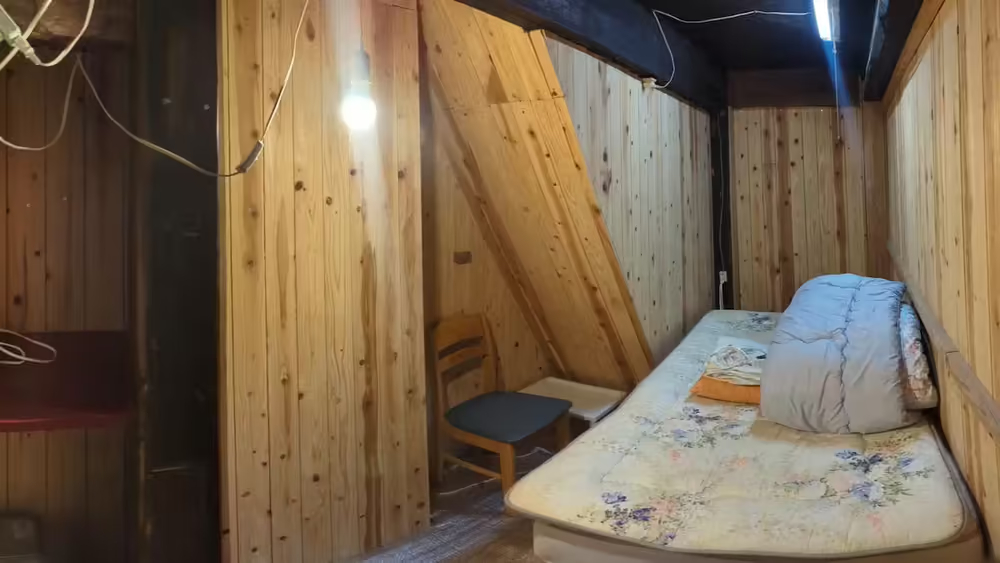
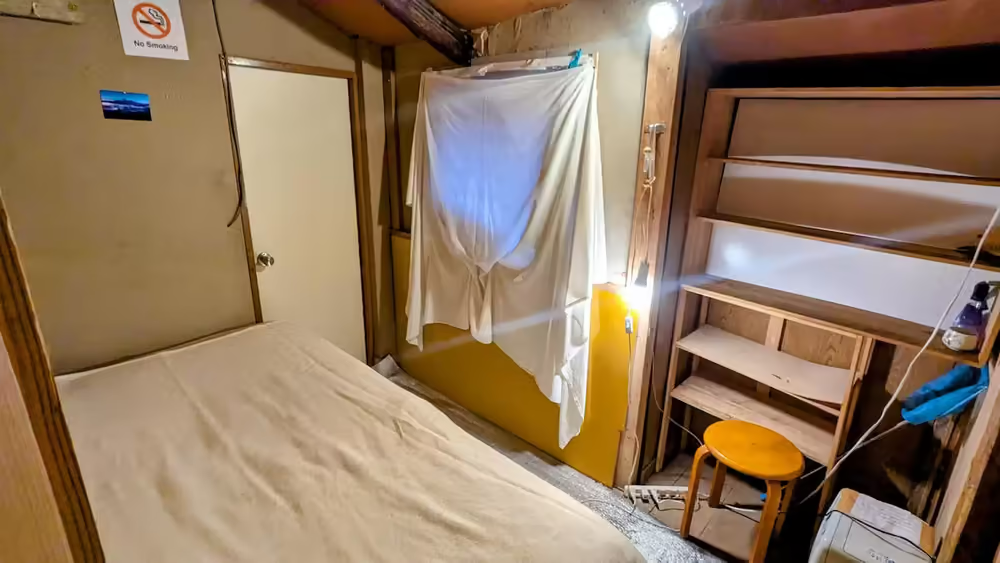
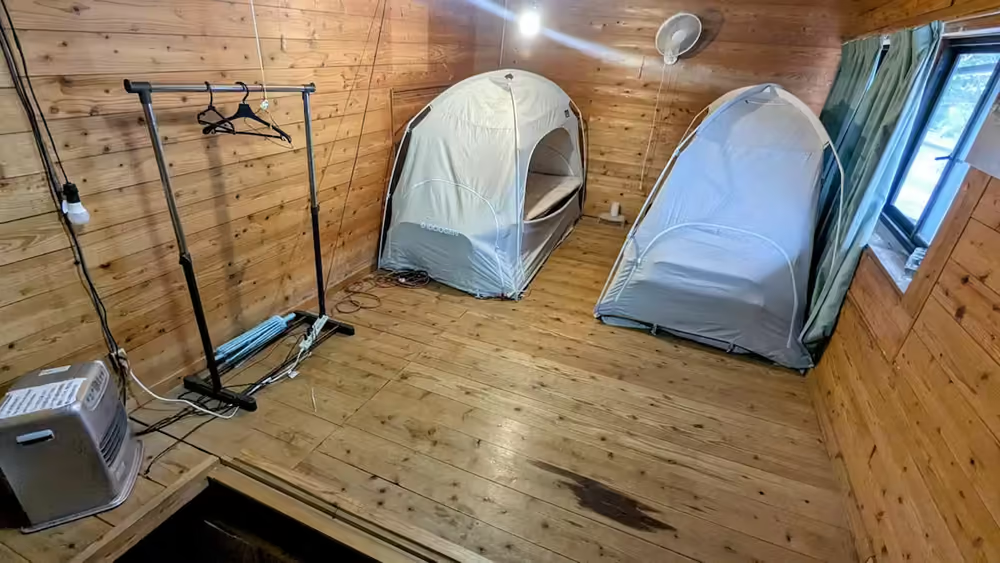
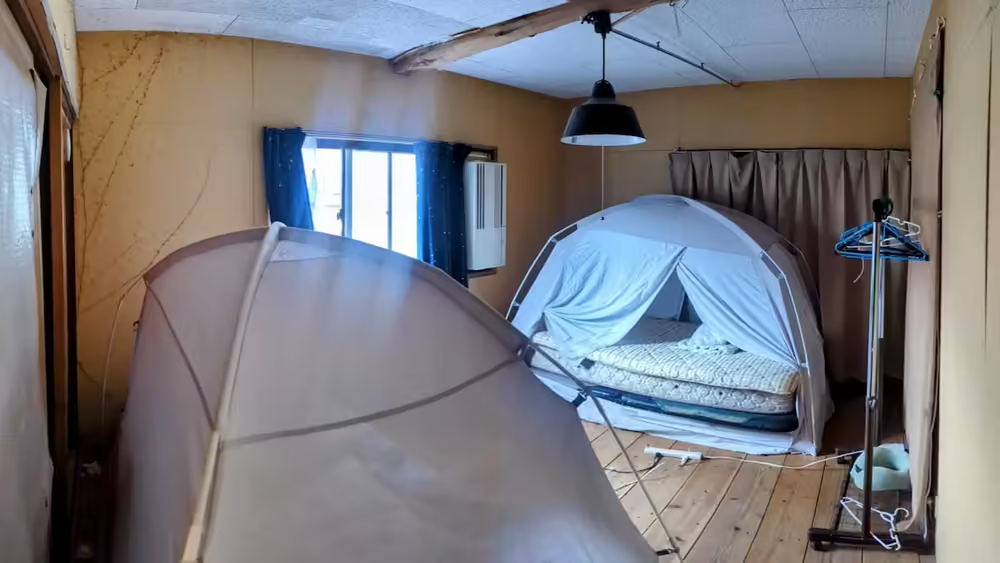
The rooms are handmade, a single house divided up with wooden boards. Each has a bed and space for your luggage. In winter we use insulated tents, in summer mosquito nets. There’s no insulation or soundproofing, so you’ll hear whoever’s in the next room.
Futons and sheets
To keep the futons and pillows clean, we’ll give you three things to use: a cover for the top futon, a sheet for the bottom one, and a pillowcase. Please use all three. If something gets stained by accident, we may ask you to cover the cleaning cost. In winter there are also blankets, electric blankets, and kerosene heaters.
Important
- No smoking inside the House. Smoke on the chairs in front of the cafe, and check the cafe door isn’t open when you do.
- In winter, turn the heater off whenever you leave your room or go to sleep. Leaving it on is a fire risk.
WiFi and signal
There’s WiFi in both the cafe and the House, and the mobile signal is strong.
Cat
We currently have one house cat on staff, along with several stray cats in his circle. Hobbies: raiding the food.
At the moment, he’s using the owner’s bed and lap as a makeshift litter box, though word has it what he actually wants is a cleaner one.
Worth watching out for, and not just if you have a cat allergy.
About the noise
The community hall across the street plays loud music or a siren at 6 a.m., noon, 5 p.m., and 9 p.m. Earplugs might be a good idea.
At night you may also hear scratching under the floor, or an eerie cry. We think it’s a masked palm civet (hakubishin). We keep trying to block the ways in, without much luck so far.
2. Your stay
This section is about your time outside of activities. Basically, look after your own things. In practice, though, most things just get done by whoever notices.
A few things to keep to
- Wash, dry, and put back any dishes, cookware, or tools you use. The same goes in the House and in the cafe.
- Leftovers and trash left out attract insects, so put food in the House fridge with your name on it, or in a lidded container.
What to bring
Bring your own toiletries (towel, toothbrush, soap, and the like) and a hair dryer. Take your belongings with you when you leave.
Food
The cafe’s ingredients and the previous day’s dishes are in the kitchen fridge, and you’re generally free to eat them, days off included. The one exception: don’t eat or use anything with a name written on it.
You can also eat the cafe’s buffet food there. When seats are free you’re welcome to sit in the dining area; customers come first, so when you can eat depends on your shift. See “Mealtimes” under “Activities at the cafe” for the details.
The fridges
There are fridges in both the cafe and the House.
- The cafe kitchen fridge: the cafe’s ingredients and the previous day’s dishes.
- The House fridge: for food you’ve bought for yourself.
If you want to hold on to your own food, or something you’re planning to cook with, write your name on it. With your name on it, people leave it alone. Mostly.
Also, keep strong-smelling things out of the fridge: curry, pickles, cosmetics, that sort of thing.
Drinks
The tap water is drinkable. If you’d rather not taste the chlorine, you can buy bottled water, or use the spring water a 20-minute walk away. If you have any of the cafe’s coffee, put ¥100 a cup into the fair-box (the box by the door).
Bathing (onsen)
There’s no bath in the House. Instead, you can use the hot spring (onsen) at a guesthouse that belongs to the owner’s family, a 10-minute walk away.
- The men’s and women’s baths are open to you any time. Guesthouse guests use them too, so mind the usual courtesies; a greeting goes a long way.
- For the private bath, just lock it from the inside while you’re using it. 30 minutes per person.
- Shampoo and body soap are provided at the onsen. Bring your own towel and hair dryer.
- The water runs straight from the source, so it’s sometimes on the cool side. It’s also emptied for cleaning now and then. The shower is always available.
- There’s also a public bathhouse nearby, Yunotsubo Onsen (ゆのつぼ温泉; 10:00–22:00, ¥200). It has no showers, so bring your own towel, shampoo, and body soap. At 10 p.m. on the dot, the local uncles and aunties turn up to start cleaning, whether or not you’re still in the water, so it’s best to be out before then.
Watch out for thermal shock. Winter temperatures in Yufuin drop below zero. The temperature swing between the hot water and the freezing air is severe, and moving between them suddenly (getting in fast, or standing up fast) can be genuinely dangerous. Move slowly.
Laundry
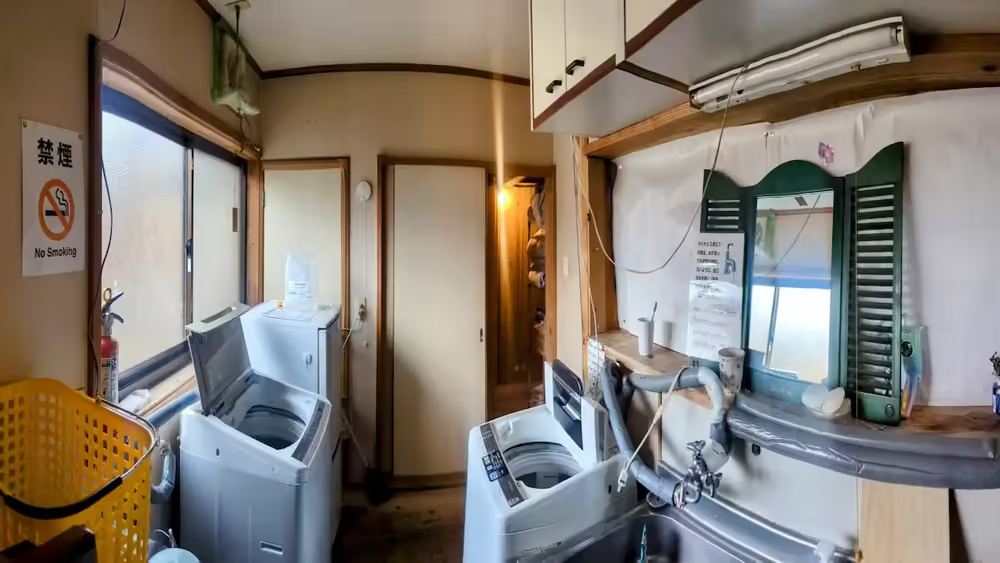
There are two washing machines in the House (detergent provided).
- Take your laundry out promptly when it’s done, and leave the lid open. Left sitting, it goes musty, and someone else may pull it out to use the machine.
- Please don’t run them after 9 p.m.
- You can dry laundry indoors or outside the House.
- During the rainy season, or whenever things won’t dry or start to smell, the dryers at the coin laundry (5-minute walk) are handy.
The washing machines occasionally get moody, but don’t worry: one of the staff has the magic touch.
Sorting the trash
Sort it into four types: burnable, non-burnable, PET bottles (crushed), and bottles and cans. In the House, use the bins by the entrance; in the cafe, the bins in the kitchen.
Toilet
The toilet is outside, shared with cafe customers.
- If you spot a mess, please clean it.
- Restock the toilet paper when it runs out.
- When the sanitary bin is full, bag it, tie it closed, and put it in the kitchen bin.
The music room
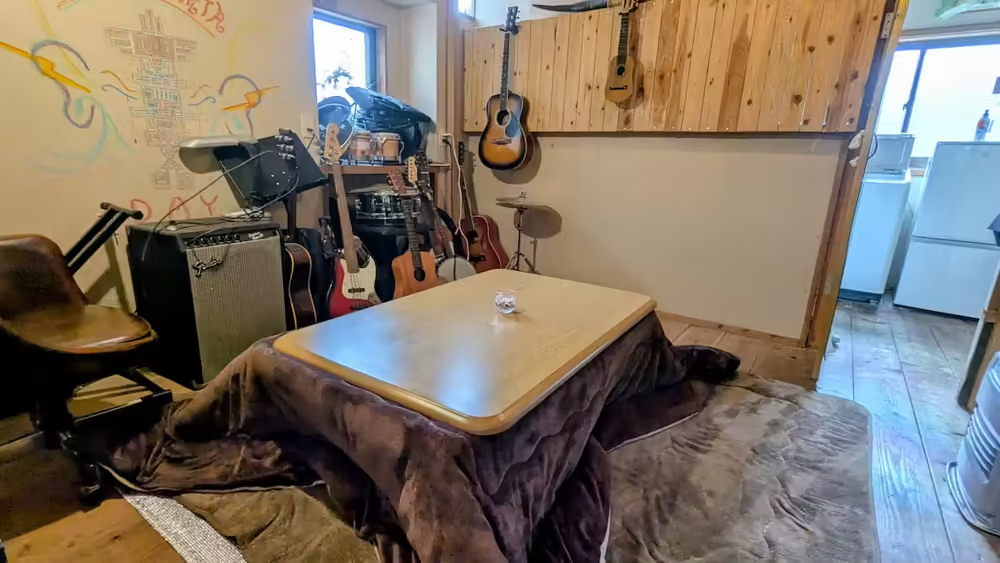
This is the shared hangout in the House. People play cards, watch movies, hang out. It isn’t soundproof, so keep things quiet after 9 p.m.
3. Activities at the cafe
What we mainly do here isn’t farm work. It’s cooking. You’re a cook, and one of the people running the restaurant. You look at what’s in the kitchen and cook whatever you like, and your dishes go straight onto the buffet.
Besides cooking, we also pitch in with other things as needed:
- Helping out at nearby small organic and pesticide-free farms
- Helping with things people in town need doing
- Cleaning, carpentry, laundry, and so on, to keep the place comfortable for everyone
If something’s heavy, whoever’s up for it takes it.
Shifts
You take either the lunch or the dinner shift, and write yourself in on the schedule board in the kitchen. Your shifts aren’t fixed, so you can change day to day. A shift is usually three to six people. We work it out among ourselves.
Even when you’re not on shift, a hand with the cleanup after closing is always appreciated. And on very busy days, or when a lot of reservations come in, we may ask you to help.
Morning / lunch shift (rough guide)
| Time | ||
|---|---|---|
| 7:30 | Unlock | The owner unlocks the cafe. |
| 9:00 | Start | Cleaning (kitchen, dining area, floors, toilet) and refilling the water and tea pots for customers. Finish your breakfast before this time. |
| 9:30 | Start cooking | Put dishes on the buffet table as they’re ready. Remake the previous day’s dishes too. |
| 11:50 | Open | We open even if the food isn’t all ready. Regulars sometimes come before opening and eat what’s already out. |
| 14:00 | Close / meal | Staff eat in the dining area. Cleanup (washing up, wiping tables, cleaning the counters and stove) and replating dishes that can go out again in the evening. |
| 15:00 | Done |
Evening / dinner shift (rough guide)
| Time | ||
|---|---|---|
| 16:00 | Start | Cleaning (kitchen, dining area, floors), refilling the water and tea pots, cooking (including checking and remaking the lunch leftovers). |
| 18:00 | Open | We open even if the food isn’t all ready. |
| 20:00 | Close / meal | Staff eat in the dining area. Cleanup. Move leftovers into containers, label them with the date, and put them in the kitchen fridge. |
| 21:00 | Done | Some evenings we hang around talking or playing card games. |
| 22:30 | Lock up | The owner locks the cafe. |
Keep it quiet at night. People live in the apartments above the cafe, so don’t raise your voice outside or by the entrance. After 10:30 p.m., move to the music room in the House.
Mealtimes
Breakfast is yours to make. You’re welcome to use the previous day’s dishes or ingredients from the kitchen fridge. Whether you’re on the lunch or the dinner shift, finish by 9 a.m., because lunch prep starts right after and the kitchen gets crowded.
For lunch and dinner, you eat from the buffet that’s being served. Usually everyone eats together after closing (around 2 p.m. for lunch, 8 p.m. for dinner). If you’re not on that shift, you can eat earlier, from an hour before closing.
Outside those times, it depends on whether you’re on shift.
- On shift: tasting as you cook is fine.
- Off shift: your own food in the House fridge, and leftovers in the kitchen fridge, are yours any time.
Whenever you eat in the dining area, customers come first.
Greeting customers
When customers arrive or leave, greet them with irasshaimase (welcome) or arigatou gozaimashita (thank you).
How much to make?
- Aim for three dishes.
- Around four servings per dish is a good guide.
Customer numbers are very unpredictable, anywhere from 5 to 20 people.
Don’t make too much of one dish. More dishes is fine, but a big batch of a single thing is hard to deal with when it’s left over. The food you make is yours to see through: turn leftovers into new dishes where you can, and try not to waste anything.
Knives
Wash knives right after use and put them back where they belong. They’re dangerous when they get mixed in with the dishes and tools.
Catering to dietary needs
We often get customers with dietary restrictions, such as vegans and vegetarians. Requests like “no onion or garlic,” “gluten-free,” or “something easy for kids to eat” come in too.
- Label your dishes so customers can see what’s in them. The labels are in the kitchen.
- Unless there’s a specific request, catering to restrictions is up to you.
Common dietary restrictions
| Type | Can eat | Avoids |
|---|---|---|
| Vegan | Vegetables, grains, beans, fruit | Meat, seafood, eggs, dairy, honey, animal gelatin, bonito flakes (katsuobushi), etc. |
| Vegetarian | Vegetables, grains, beans, fruit, eggs, dairy, honey | Meat, seafood, animal gelatin, etc. |
| Vegetarian, no alliums | Vegetables, grains, beans, fruit, eggs, dairy, honey | Meat, seafood, animal gelatin, and the five pungent vegetables (onion, garlic, chives, leek, scallion) |
| Gluten-free | Foods with no wheat | Bread, pasta, ordinary soy sauce and miso, curry roux, ham and sausage, etc. |
A note. Large groups on the no-alliums diet sometimes arrive without a reservation, so it’s ideal to keep something ready for them at all times. What they eat is close to vegetarian, eggs and dairy included; the difference is avoiding the five pungent vegetables (onion, garlic, chives, leek, scallion). Ginger and celery are fine. For gluten-free customers, we generally keep wheat-free soy sauce and miso in stock.
Examples, dish by dish
○ means it works, × means it doesn’t.
| Dish | Vegan | Veg | No alliums | GF | Notes |
|---|---|---|---|---|---|
| Mizuna and lettuce salad | ○ | ○ | ○ | ○ | Without dressing |
| Yuzu dressing | ○ | ○ | ○ | ○ | If no onion is used |
| Tomato and tofu “mozzarella” | ○ | ○ | ○ | ○ | |
| Rice-flour vegetable tempura | ○ | ○ | ○ | ○ | Mind the shared frying oil |
| French fries | ○ | ○ | ○ | ○ | Mind the shared frying oil |
| Kinpira (braised burdock) | ○ | ○ | ○ | ○ | With GF soy sauce |
| Tamagoyaki (rolled omelette) | × | ○ | ○ | ○ | With GF soy sauce |
| Handmade cream pasta | × | ○ | × | × | Contains egg, dairy, alliums, wheat |
| Chunky vegetable curry | ○ | ○ | × | × | Contains alliums and wheat (roux) |
| Indian-style spiced lentil curry | ○ | ○ | × | ○ | Contains alliums |
| Miso soup | ○ | ○ | ○ | ○ | Depends on the dashi and miso |
| Mapo tofu | × | × | × | ○ | Contains meat and alliums With GF soy sauce |
| Rice-flour karaage (fried chicken) | × | × | × | ○ | Contains meat and alliums |
| Rice-flour soy-milk banana cake | ○ | ○ | ○ | ○ | If no butter or egg |
| Warabi mochi (bracken-starch jelly) | ○ | ○ | ○ | ○ | |
| Coffee jelly | × | × | × | ○ | Uses gelatin (pork-derived) |
Requesting ingredients
We keep the basics in stock. If you need something else, you can ask us to pick it up, and we’ll try.
- Write what you need, or what’s run out, on the paper on the fridge.
- The owner shops twice a day, around 10 a.m. and around 3 p.m. You’re welcome to come along and see what’s in the shops.
We try to say yes where we can, but some things aren’t sold in town, or are very expensive, and then we can’t buy them. If you really want a particular ingredient, it’s at your own expense.
Hard to get in town, or expensive
We often can’t get these, even on request.
- Butter: we buy only a few blocks a day (200 g each). More than that, we can’t manage.
- Cheese: processed cheese, always. Now and then, some arrives from the owner’s brother, who is a cheesemaker.
- Fruit: strawberries, apples, grapes, peaches, melon and the like are expensive, so usually not. Bananas, always. Canned white peach and pineapple, always.
- Beans: chickpeas, lentils and so on, small amounts only.
- Chocolate: small amounts only.
- Nuts and avocado: very expensive, so normally not stocked.
- Peanut butter: the sweetened kind, small amounts only.
- Tahini: we make it from sesame.
- Mayonnaise: made fresh each time, not kept in stock.
- Fish: it makes the kitchen smell if it isn’t handled carefully, so we don’t usually use it.
- Also hard to get: bacon, lasagne sheets.
Kitchen equipment
- Heat and large appliances: 8 stovetop burners, 1 gas oven (fits two loaves of bread), toaster oven, microwave
- Pots and pans: lots of frying pans and pots, steamer, pressure cooker
- Electric: food processor, electric mill, hand mixer, high-power blender, electric whisk, bread kneader, juicer
- Specialty: hot plate, waffle maker, toastie press, dehydrator (for dried fruit), takoyaki pan, taiyaki pan
- Tins and molds: tart tins, chiffon cake pans, cupcake tins, cookie cutters
If you need something that isn’t listed, ask. It may be tucked away somewhere.
What we keep in stock
Let us know if any of these have run out.
- Vegetables and mushrooms: potato, carrot, onion, garlic, ginger, burdock (gobō) / cabbage, napa cabbage, bean sprouts, spring onion (thin and thick), mizuna, shiso, garlic chives (nira) / shiitake, enoki, maitake, buna-shimeji / tomato, eggplant, green pepper, broccoli, kabocha (Japanese pumpkin)
- Grains, flours, noodles: white rice (milled daily), brown rice, glutinous rice, mochi, rice flakes / bread flour, cake flour, rice flour, panko, buckwheat flour, kinako (roasted soy flour), joshinko and shiratamako and dango flour (rice flours for sweets) / dried pasta, soba, udon, somen, glass noodles / potato starch (katakuriko)
- Beans, soy, dairy, meat, eggs: lentils, chickpeas, soybeans, natto, tofu (firm and silken), soy milk, atsuage and aburaage (fried tofu) / eggs, milk, butter, cream, yogurt, processed cheese / chicken thigh, thin-sliced pork, sausages
- Seasonings, oils, vinegars: soy sauce, miso, mirin, sake, salt (sea and rock) / granulated sugar, cane sugar / olive oil, sesame oil, rice oil / rice vinegar, cider vinegar, balsamic vinegar / ketchup, Tabasco, Worcestershire sauce, oyster sauce, fish sauce, doubanjiang, tianmianjiang, gochujang, green curry paste, tamarind paste, umeboshi
- Spices, herbs, aromatics: cumin, coriander, mustard seed, fenugreek, cardamom, nutmeg, cinnamon, clove, fennel, star anise, chili, black pepper (with a mill), turmeric, paprika, five-spice / bay leaf, rosemary, oregano, dried parsley, dried basil, lemongrass, kaffir lime leaf, curry leaf, kasoori methi (dried fenugreek leaf) / roasted sesame (black and white), wasabi, karashi (hot mustard), ichimi and shichimi (chili blends)
- Preserved and dried: canned pineapple, mandarin, tomato, corn, tuna, coconut milk / dried shiitake, kombu, nori, wakame, hijiki, bonito flakes, iriko (dried baby sardines), aosa (sea lettuce) / konnyaku, spring roll wrappers (fried and fresh), tenkasu (tempura bits)
- Baking and drinks: chocolate, honey, cocoa, dry yeast, baking soda, baking powder, gelatin, agar, powdered sugar, vanilla oil and essence, matcha powder, moringa powder, kansui (alkaline water for ramen noodles) / black tea (Ceylon), green tea, hojicha (roasted green tea), papaya tea, coffee beans / wine (red and white), beer, umeshu (plum wine)
4. Days off
WWOOF’s guidelines are one day off a week. At Harappa Cafe we make it two: Tuesday and Wednesday, when the cafe is closed.
Birthday-month party
On the last Tuesday of each month, there’s a party at the cafe for staff and people from the neighbourhood.
Tuesday is a day off, but just for this one day, we ask everyone to make about one dish or dessert. The party starts around 6 p.m., so plan your cooking for then. Taking part is optional.
It goes ahead whether or not anyone actually has a birthday that month.
5. When you leave
So the next person can settle in comfortably, please finish these before you go:
- Clean your room, every corner.
- Wash all the sheets you used, dry them, and put them back where they belong.
If you’re leaving early and the sheets won’t dry in time, let the others know ahead of time, without fail.
6. About this place
There aren’t many rules at Harappa Cafe, nobody stands over you, and it isn’t a tense place. The flip side is that everyone thinks for themselves and takes responsibility for what they do. Some people find that unsettling at first, like nobody’s really in charge. And things here will probably be done differently from how you’d do them.
If you have an idea, a “what if we tried this,” please share it. Let’s talk it over. A good idea that’s easy to keep up tends to stick.
On the situation in Palestine
As a community, Harappa Cafe values being a place where everyone can feel safe and comfortable. We do not hold any specific political ideology, nor do we deny any.
However, the cafe owner, as an individual, has deep concern and strong feelings regarding the situation in Palestine, and people who share those views sometimes visit. There is a poster supporting a ceasefire in the cafe.
7. FAQ
If your question isn’t here, please ask us anytime.
Your stay and daily life
Is there parking?
Yes, but space is limited, so check with us in advance.
Can you accommodate allergies and dietary needs?
Yes, as much as we can. Vegan, vegetarian, and gluten-free are all fine. For other allergies, talk to us.
Do I need any special gear (rubber boots and the like)?
No. When we go to help at a farm, we provide everything, work gloves and rubber boots included.
Can I bring my own alcohol?
Yes. Just no drinking before or during activities.
Nearby amenities
Are there supermarkets and drugstores nearby?
Yes.
- Supermarkets: A-Coop (5-minute walk, 10:00–19:00), Marumiya (6-minute walk, 10:00–20:00), AEON (15-minute walk, 9:00–22:00; the largest, with a Daiso 100-yen shop on the second floor)
- Drugstore: Cosmos (3-minute walk, 10:00–21:00)
Is there a convenience store nearby?
Yes. A 7-Eleven is a 2-minute walk, a Lawson a 10-minute walk.
Is there an ATM nearby?
Yes, in the convenience stores above.
Is there a post office nearby?
Yes, near JR Yufuin Station (15-minute walk). The parcel counter is open 9:00–17:00. Closed weekends and public holidays. To send a parcel to the cafe, see “Can I send my luggage ahead?” below.
Can I use credit cards in town?
Mostly yes, at supermarkets and the like. Some shops don’t take them, so it’s worth keeping some cash.
Is there a hospital nearby?
Yes. One a 10-minute walk away, and a bigger general hospital 5 minutes by car. There are several others in the city.
Is there a police station nearby?
Yes, about a 20-minute walk from Harappa Cafe. Rumor has it there’s a handsome officer there. Intel is two years old.
About Yufuin
What's the climate like in Yufuin?
Big gap between day and night temperatures, and winter is bitterly cold.
- Spring (Mar–May): cherry blossom and fresh green, an easy season. 1–11°C mornings and evenings, 12–23°C in the day. March is still cold.
- Summer (Jun–Aug): 16–20°C mornings and evenings, 25–35°C in the day. Afternoons are murderously hot, but mornings and evenings are fairly comfortable.
- Autumn (Sep–Nov): vivid autumn leaves. 4–16°C mornings and evenings, 15–26°C in the day. November mornings and evenings turn cold.
- Winter (Dec–Feb): harsh cold; roads and pipes can freeze. Below zero on many mornings and evenings (typically −1 to −5°C), and only 7–10°C even in the day.
Are there sights nearby?
A few well-known ones.
- Hot springs: many inns and hotels open their baths to day visitors.
- Mount Yufu: changes with the seasons, and popular to climb.
- Lake Kinrin: a largish pond fed by a hot spring from below; in winter, steam rises off the surface.
- Yunotsubo Kaido: the main street from Yufuin Station to Lake Kinrin, lined with souvenir shops, cafes, and sweet shops. Sadly, though, mostly chains.
Other
Can I send my luggage ahead?
Yes. Please let us know in advance.
Address it, in Japanese or English, to:
〒879-5102 大分県由布市湯布院町川上1525-12 原っぱカフェ内 [your name]
1525-12 Kawakami, Yufuin-cho, Yufu-shi, Oita 879-5102, c/o Harappa Cafe, [your name]
Phone: 0977842621
Do I need to speak English?
No, of course not. Plenty of people here can’t speak English at all, and it works out. A few basic phrases for greetings and thanks are appreciated, and if you’re learning, use them.
That said, if you’re reading this without a translator, your English is already more than enough.
Do I need to speak Japanese?
Of course you’ll be fine.
Just being able to say konnichiwa (hello) and arigatou (thank you) makes everyone happy.
The owner speaks English, and a translation app on your phone works fine, so don’t worry.
Plenty of Japanese people aren’t great at Japanese either. The person who wrote this is one of them. You’ll be fine. I guarantee it. Probably.
8. Finally
Every day here is lively and full.
We’re really looking forward to meeting you.
